FDA Orders Eye Stroke Warning on Ozempic, Wegovy and All GLP-1 Drugs
The FDA's class-wide warning on a rare eye stroke rests on trial data that work out to about one extra case per 38,000 people a year. Here is what the numbers mean and which symptoms the FDA says need a call right away.

The FDA has ordered an eye-stroke warning onto Ozempic, Wegovy and every other GLP-1 drug, resting partly on 15 probable cases among 134,253 clinical trial participants.
The order came Monday, Nov. 9, in a Drug Safety Communication telling every maker of a GLP-1 receptor agonist, the drug family that includes Ozempic, Wegovy, Mounjaro and Zepbound, to add a warning to its label. The agency's phrase is a potential increased risk
of NAION, a rare loss of blood flow to the optic nerve.
People taking these drugs have been handed the word "blindness" with almost no sense of scale, and scale is what lets a patient decide calmly.
"We don't want patients to really get overly concerned and anxious and to stop these medications."
Dr. Manjot Gill, ophthalmologist at Northwestern Medicine in Chicago, to NBC News
Here is the scale. The FDA's trial data work out to about one extra case for every 38,000 people who take one of these drugs for a year.
That is rare. The FDA also said NAION (non-arteritic anterior ischemic optic neuropathy, in full) can cause permanent vision loss
. Both things are true.
What the FDA counted
The agency pooled 126 randomized trials, it said, because of the small number or absence of cases of NAION observed in individual trials
. Of the probable cases it found, 10 were in people on one of the drugs and five in people on a placebo.
That gave rates of 6.4 cases per 100,000 person-years on the drugs and 3.8 on a placebo or another diabetes drug. A person-year is one person taking the medicine for one year.
Subtract one rate from the other and the gap is 2.6 extra cases per 100,000 people a year, or roughly one in 38,000, a figure the FDA did not publish but which follows from its two rates.
Put another way, of 10,000 people treated for a year, fewer than one would be expected to develop NAION with or without the drug.
For context, the FDA cited published estimates for all adults over 50, given with the table below, and both trial rates sit inside that range.

The order is wide. The FDA's table lists 12 brand names: Byetta, Victoza, Trulicity, Saxenda, Xultophy, Soliqua, Ozempic, Rybelsus, Wegovy, Mounjaro, Zepbound and Foundayo, the pill approved this year.
So yes, the pills are included, and so is tirzepatide (Mounjaro and Zepbound), which acts on a second hormone receptor as well. NAION cases have been reported for all currently marketed GLP-1 RA products,
the agency wrote. Semaglutide, the ingredient in three of them, is the same drug at the center of the FDA's compounded semaglutide ban.
All of these medicines mimic a hormone the intestine releases after eating, which the FDA said lowers blood sugar and acts on the parts of the brain that control appetite.
The new text goes into the Warnings and Precautions section and is not a boxed warning, Drug Discovery & Development reported. Novo Nordisk's and Eli Lilly's labels already carry one of those, the agency's strongest, about a possible risk of thyroid tumors, according to NBC News.
Why other studies run higher
Europe moved first. The European Medicines Agency's safety committee concluded in June 2025 that NAION is a very rare side effect
of semaglutide, and estimated about one additional case per 10,000 people treated for a year.
That is roughly four times the FDA's trial figure, and the reason is who was counted. The EMA leaned on large studies of adults with type 2 diabetes, and diabetes is itself on the FDA's list of NAION risk factors.
Line the main studies up on one scale and the pattern is hard to miss.
| Who was studied | On a GLP-1 | Comparison group | Source |
|---|---|---|---|
| Participants in 126 randomized trials of multiple GLP-1 drugs | 0.64 | 0.38 (placebo or another diabetes drug) | FDA, 2026 |
| U.S. adults with type 2 diabetes in the FDA's Sentinel health-data network, 2019–2024 | 3.0–3.2 | 3.1 (SGLT-2 inhibitor); 2.6 (DPP-4 inhibitor) | FDA Sentinel, 2026 |
| Danish adults with type 2 diabetes, semaglutide | 2.19 | 1.18 (SGLT-2 inhibitor) | Simonsen et al., 2025 |
| U.S. veterans with type 2 diabetes, semaglutide | 12.3 | 6.7 (SGLT-2 inhibitor) | Heberer et al., 2026 |
Look at the comparison group in the bottom row. Veterans who started a different diabetes drug and had not taken a GLP-1 had a rate about 10 times that of the people who did take one in the FDA's trials.
Those veterans averaged 60 years old, were mostly men and all had type 2 diabetes, Heberer and colleagues reported in JAMA Ophthalmology. In these data, who the patient is moves the starting risk more than the drug does.
The rows are not like for like: the veterans study identified cases from diagnosis codes in health records, while the FDA counted trial cases it judged probable.
Then there is the paper that started the review, a 2024 study in JAMA Ophthalmology from Massachusetts Eye and Ear. Among patients with type 2 diabetes, the estimated three-year incidence of NAION was 8.9% for those prescribed semaglutide, against 1.8% for those prescribed other diabetes drugs.
Those were patients already inside a neuro-ophthalmology clinic that, the authors wrote, sees a large proportion of the region's NAION cases
. They added that our findings may not be fully generalizable to other settings
. A clinic count is not a rate for everyone on the drug.
Whether the drug causes the condition is still open, which is why the FDA wrote "potential". In its own Sentinel study of health records, people on the drugs had a 43% higher rate than people on one family of diabetes pills, DPP-4 inhibitors, and no statistically significant difference from people on another, SGLT-2 inhibitors.
The agency also said its review of animal data did not identify a mechanism by which the drugs would do this.
The manufacturers lean on that doubt. Novo continues to believe the data do not establish a cause-and-effect relationship and we remain confident in the benefit-risk profile of our GLP-1 medicines,
Liz Skrbkova, who leads U.S. media and stakeholder relations for Novo Nordisk, told ABC News.
An Eli Lilly spokesperson told ABC News the communication does not reference any findings specific to Lilly medicines
.
Against them stands the FDA's reading of the published research: Methodologically rigorous studies consistently reported an increased risk of NAION in patients with type 2 diabetes mellitus who initiated GLP-1 RAs
. And randomized trials, which even out differences between patients, pointed the same way, though on a handful of cases.
The symptoms that need a call
NAION happens when blood flow drops at the front of the optic nerve, the bundle that carries signals from the eye to the brain. The FDA said the underlying cause is not completely understood
.
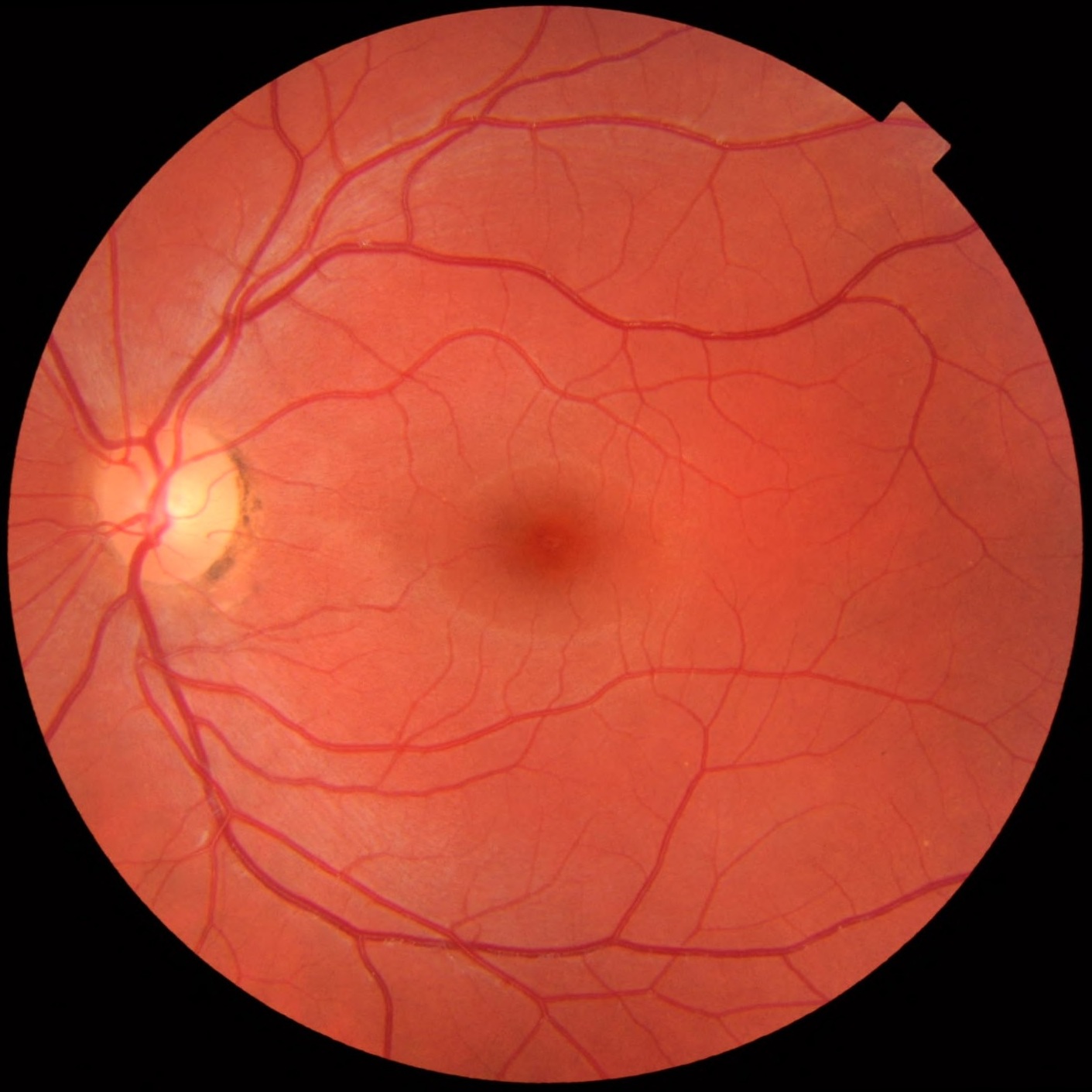
The symptoms the FDA listed are specific:
- sudden, painless loss of vision in one eye, which patients may notice on waking
- a blind spot, a missing patch or tunnel vision
- colors that look distorted
- blurry or hazy central vision
Anyone who notices one should contact a health care professional right away
, the FDA said. It told clinicians to refer suspected cases promptly to an ophthalmologist.
Some people start from a higher baseline. The FDA named smoking, diabetes, high blood pressure, sleep apnea, anemia and kidney disease as possible risk factors, and said NAION in one eye raises the risk in the other.
Should you stop? The FDA has not told patients to.
It said anyone who has had NAION should talk with a clinician about whether to continue, and it told prescribers: Consider discontinuing the GLP-1 RA in patients who develop NAION, unless the benefits of treatment clearly outweigh the risk.
Europe's instruction is firmer: If NAION is confirmed, treatment with semaglutide should be stopped.
Those benefits are not small. The drugs are used to treat type 2 diabetes and to reduce weight, and the FDA said some are also approved to lower the risk of major cardiovascular events; researchers keep testing more, including a trial of semaglutide and an aging marker.
"For endocrinologists, the message is not to discontinue these medications routinely but to incorporate this potential risk into shared decision-making, particularly for patients with prior NAION or significant vascular risk factors."
Sangeeta Kashyap, MD, New York-Presbyterian/Weill Cornell Medical Center, writing in Healio
Speed will not bring vision back. There is no treatment to improve vision loss from ION,
the American Academy of Ophthalmology tells patients. The FDA said NAION in one eye raises the risk in the other, and it told prescribers to consider stopping the drug in patients who develop the condition.
Side effects can be reported to the FDA through MedWatch.
The FDA has not said when the revised labels will reach pharmacies. Nothing in the advice waits for them: the FDA says anyone with sudden loss of vision in one eye should contact a health care professional right away.


