US Loses Measles Elimination Status After 26 Years, Researchers Say
A PAHO commission has concluded the US lost its measles elimination status, researchers told KFF Health News, and Utah's own sequencing shows one lineage spread there for more than a year. Here is what that ruling changes for families, and what Canada's year since its own loss says about the way back.

The United States has lost the measles elimination status it held since 2000, a Pan American Health Organization commission has concluded, researchers told KFF Health News.
The commission, an independent expert panel for PAHO, the World Health Organization's office for the Americas, met in Washington from Nov. 10 to 13. It found that measles has re-established regular transmission in the country, according to the researchers, who have direct knowledge of the deliberations.
The rule that took the status away is the same rule that decides when it comes back, and families in Pennsylvania, Wisconsin and Utah are living inside it.
"It means ERs and pediatricians need to consider measles in anyone with a fever and rash, whether they've traveled overseas or not. And we may now become an exporter of measles to other countries."
Dr. Céline Gounder, CBS News medical correspondent
The Wall Street Journal reported the finding first, on Friday, Nov. 13, and a person close to the process told CNN the same. PAHO had planned to make it public on Tuesday, Nov. 17.
Elimination never meant zero measles. As KFF Health News put it, "elimination" allows for occasional outbreaks.
What it does not allow is a chain that never breaks. Under PAHO's own definition, the commission looks for "uninterrupted circulation of the same virus genotype and lineage for 12 months or more in a specific geographic area."
Think of a genotype as a family name read from the virus's genetic code, and a lineage as one branch of that family.
So the status does not turn on how many people catch measles. It turns on whether one branch of the virus keeps passing from person to person in one region for a year, which Utah's own sequencing shows happened there.
The commission sends its recommendation to PAHO Director Jarbas Barbosa, who formally communicates the classification to national authorities, according to PAHO. This year it weighed two analyses, one by the CDC and one by an independent group of measles experts, KFF Health News reported.
Noel Brewer of the University of North Carolina, who chairs that panel, presented both to PAHO's experts on Nov. 10, Reuters reported. He would not provide details of his group's assessment, and CNN reported that it is not clear what data the committee relied on.
One strain, one year
The clearest public evidence sits in Utah. The state sequenced the virus from 454 of the 687 confirmed cases recorded between June 13, 2025 and June 13, 2026, according to Utah's genome-sequencing study, an unreviewed preprint posted Aug. 27.
Sequencing means reading the virus's genetic code letter by letter, the only way to tell one long chain from many separate arrivals.
The study traced the first sustained introduction to a June 2025 case in Utah County, in a person who had traveled to southwest Utah. That was the first known case linked to the Utah–Arizona border outbreak, which "sustained transmission through at least June 2026, accounting for 95.6% of cases," the authors wrote.
Nearly every sequenced Utah case for a year traced back to one introduction.
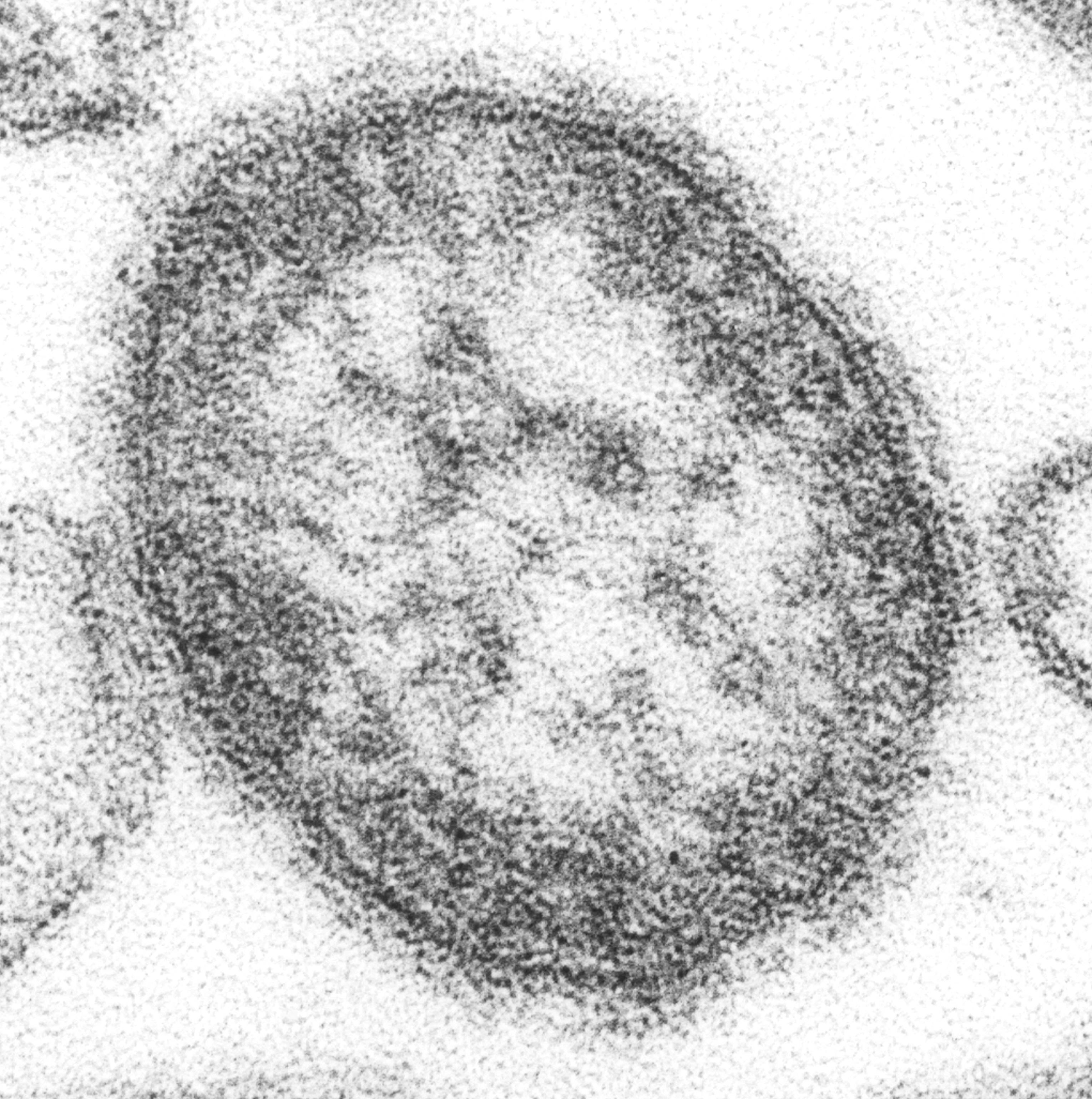
The usual tools barely saw it. Traditional contact tracing had a sensitivity of just 0.3%, the authors found.
In January, Brewer told NBC News that the same strain technically has to spread for at least a year, and that "as a formal matter, the U.S. does not seem destined to lose its elimination status in 2026." Preliminary evidence suggested Texas cases had stopped in July 2025, with a three-week gap before the Utah-Arizona outbreak began, he told Reuters.
Kelly Oakeson of the Utah Public Health Laboratory told Reuters the Utah strain was "different enough" from the Texas outbreak to suggest they are unrelated. Utah's own outbreak passed one year in June, KFF Health News reported.
What changes for families
On paper, almost nothing. Lawrence Gostin of Georgetown University said the loss has no legal or practical consequences, Health Policy Watch reported, though he called it "an urgent warning that measles transmission is unchecked and that our vaccination system has broken down."
"Let's say we did lose our measles elimination status. We're going to be doing the same exact thing that we've been doing today, which is working with the states,"
Dr. Erica Schwartz, CDC director, to Reuters on Nov. 10
The practical rules in the CDC's vaccine schedule stay where they were:
- Children get two MMR doses, at 12 to 15 months and at 4 to 6 years.
- Infants 6 to 11 months old should get one dose before international travel, then two more after the first birthday. In outbreaks, health authorities may recommend that early dose too.
- Adults need at least one documented dose, and higher-risk adults such as health workers need two. Birth before 1957 counts as evidence of immunity, and there is no routine booster.
- School vaccine rules are set by states. Gounder noted that most legislatures reconvene in January.
President Trump's separate Aug. 10 executive order keeps measles, mumps and rubella among "immunizations recommended for all children," while calling for the combined shot eventually to be offered as three single shots. AJMC reported that the order "does not immediately replace the current CDC childhood immunization schedule," though coverage duties could shift if changes take effect.
What does change is the risk where a family lives. The CDC counts 5,412 confirmed cases in 2026 as of Nov. 12, more than double 2025's total.
About 96% of this year's patients were unvaccinated or of unknown status. Two MMR doses, by contrast, are about 97% effective.
About 1 in 9 reported cases this year ended in hospital, CNN reported, citing the CDC. Among unvaccinated people, about 1 in 5 who get measles are hospitalized, according to the National Foundation for Infectious Diseases, citing the CDC.
And 1 to 3 of every 1,000 children with measles die, even with the best care, the foundation said.
For a fully vaccinated adult, the change is small. For a baby under 12 months, or an unvaccinated adult in an outbreak state, it is not.
One of the CDC's original yardsticks for elimination is fewer than one case per 10 million people a year. The US reported more than 90 per 10 million in early 2026, according to a letter in The Lancet summarized by CIDRAP.
| 2001–2011 (elimination era, 10 years) | 2025 | 2026 (to mid-Nov.) | |
|---|---|---|---|
| Measles outbreaks | 64 in total | 48 | 43 new |
| Share of cases imported | about 40% | 10% | 4% |
| Measles deaths | 1 in total | 3 | 10 (state reports; CDC lists 6) |
| Confirmed cases | – | 2,289 | 5,412 (CDC, as of Nov. 12) |
Fewer imports means more homegrown spread, the thing the commission measures.
Seven of the deaths that state health departments report this year were in Pennsylvania, according to CIDRAP. The CDC's page lists fewer and calls its count "subject to change."
Pennsylvania's 1,542 cases eclipse those of any other state, CIDRAP reported. Its outbreak began in Lancaster County in April, WHYY reported.
The state epidemiologist, Lisa McHugh, said the outbreak seems to be slowing, CIDRAP reported. Still, Pennsylvania confirmed 61 new infections in the week to Nov. 13, and Wisconsin 174, the most of any state, CIDRAP reported.
Canada's year so far
The rule for winning it back is as plain as the one for losing it. A country "must demonstrate interruption of endemic transmission for at least 12 consecutive months," PAHO says.
That sets two clocks. First, every endemic chain has to stop, and no health authority has said that has happened in the US. Then comes at least a full clean year, judged by a commission that has met each November.
When Canada lost its status on Nov. 10, 2025, Barbosa said: "This loss represents a setback—but it is also reversible."
Canada shows how long reversible takes. Its outbreak began in New Brunswick in October 2024, and the Public Health Agency of Canada declared it over only on Monday, Oct. 19, 2026, Global News reported.
That was 11 months and nine days after the loss, and Canada's clean year had barely begun.
Count a year from a last case around mid-August 2026 and its earliest return is late summer 2027, pending the commission's verdict.
Even if every American chain stopped today, Nov. 15, a clean year would run to mid-November 2027 at the earliest.
That is the published rule, not a forecast. Pennsylvania's outbreak, if not stopped, would itself reach 12 months in April 2027.
With outbreaks expanding in several states, that moment isn't on the horizon, Paul Rota, a microbiologist and former CDC official, told KFF Health News.
"Bigger fires create more embers, and any one of those embers can seed another fire,"
Paul Rota, microbiologist and former CDC official
The argument over blame runs beside the science. HHS spokesperson Emily Hilliard told Healio: "Attempts to blame the current HHS leadership for today's measles outbreaks ignore years of vaccination gaps that predate this administration."
The data give that case some weight. Kindergarten two-dose MMR coverage was already slipping, falling from 95.2% in 2019–2020 to 92.4% in 2025–2026, according to KFF.
Critics, including Gostin and former CDC officials, blame Robert F. Kennedy Jr., the health secretary, and the administration. And in January the CDC's then-deputy, Ralph Abraham, answered "Not really" when asked whether losing the status would carry much weight.
In Utah, a KFF Health News photo shows the sleeping 4-month-old of a doctor and mother, a baby "too young to be vaccinated while measles spreads in the community."
Barbosa's word was reversible. For that baby, the reversal depends on what the adults nearby choose before the first birthday.


